Prayers and Kalmas form the pillars of a Muslim’s identity and daily worship. The Six Kalmas represent the core creed and belief system of Islam, while the Prayer (Salah) is the practical manifestation of that faith. Mastering these is essential for every believer to ensure their worship is performed correctly and with a deep understanding of the spiritual bond between the servant and the Creator.
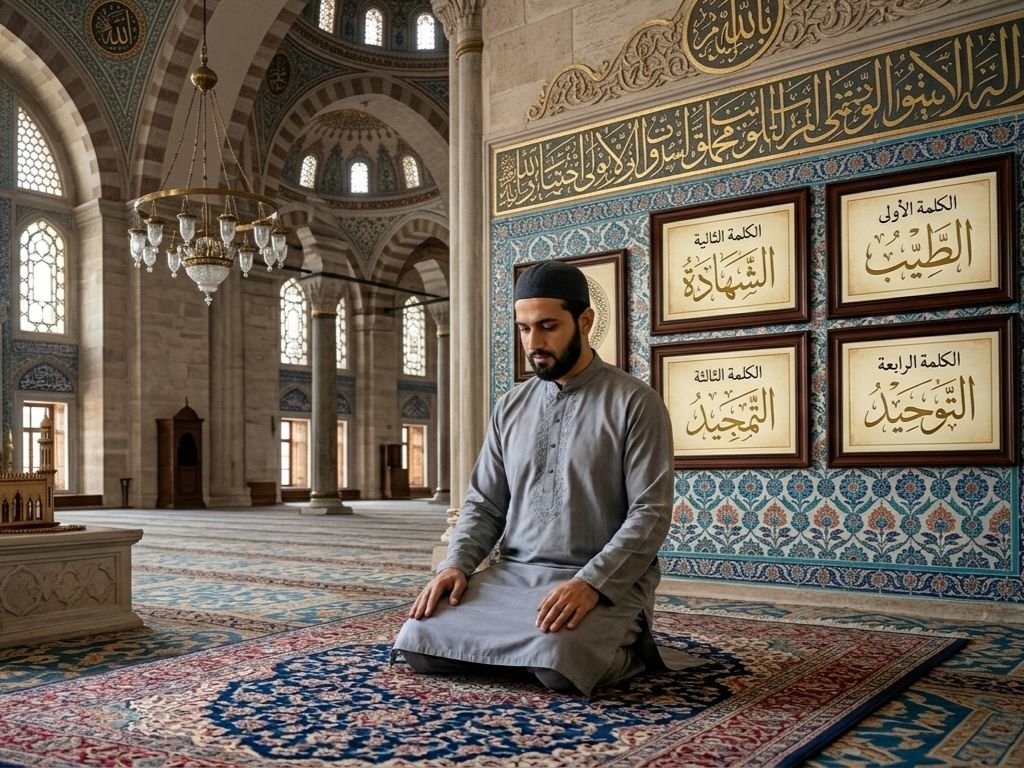
The Six Kalmas are the foundational statements of Islam, encompassing the Oneness of Allah and the Prophethood of Muhammad (PBUH). Alongside these, Salah (Prayer) is the second pillar of Islam and the first thing a believer will be questioned about on the Day of Judgment.
At Best Online Quran Academy, we prioritize teaching these essentials to children and new Muslims with a focus on both memorization and understanding. We don’t just teach you what to say; we teach you how to stand, bow, and prostrate with the correct posture and sincerity, ensuring your daily connection with Allah is perfect in both form and spirit.
This course provides a comprehensive guide to the essential acts of worship:
The Six Kalmas: Memorization with accurate pronunciation and English/Urdu translation.
Method of Wudu: Step-by-step guidance on performing the ritual purification (Ablution).
Steps of Salah: Detailed learning of Takbeer, Qiyam, Ruku, Sujood, and Tashahhud.
Prayer Recitations: Memorizing Sana, Surah Al-Fatiha, At-Tahiyat, Durood Ibrahim, and Dua-e-Qunoot.
Practical Demonstration: Learning the number of Rakat for the five daily prayers (Fajr, Dhuhr, Asr, Maghrib, and Isha).
Friday and Funeral Prayers: Basic introduction to Jumu’ah and Janaza prayers.
We use an interactive and visual approach to ensure students feel confident in their daily worship:
Step-by-Step Memorization: We break down the Kalmas and Prayer recitations into small, manageable parts for easy memorization.
Visual Correction: For Salah, our teachers use video demonstrations or live modeling to correct the student’s physical postures (Ruku and Sujood).
Meaning and Intent: We explain the translation of each prayer so the student knows what they are reciting, fostering a sense of “Khushu” (concentration).
Simulated Practice: The student “performs” a prayer virtually under the teacher’s supervision to ensure they can manage the transitions and recitations independently.
We are offering the individual classes in brother to brother and sister to sister, with one-on-one learning mechanism.
To ensure, you won't miss, we have alternative teachers to conduct the class in the absence of your teacher.
We are offering the individual classes in brother to brother and sister to sister, with one-on-one learning mechanism.
We strive hard to hire expert Arab and Non-Arab, male and female Quran teachers from Egypt, Jordan and Pakistan.
What our Students are Saying About us!